


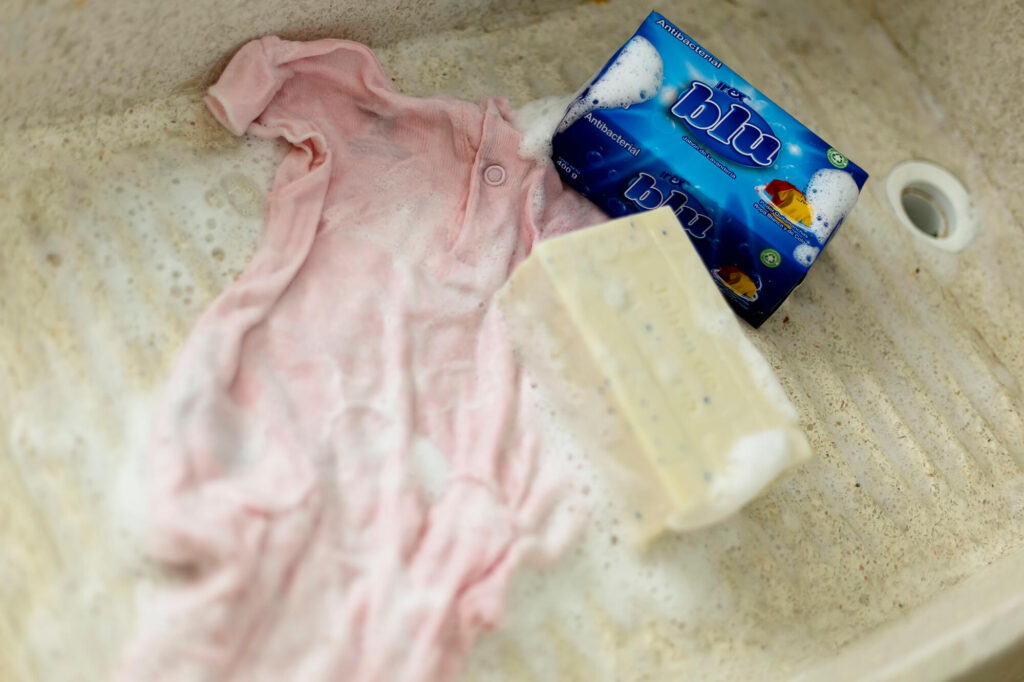
Although washing machines save us time, some garments simply benefit from a more careful wash. Knowing how to hand wash properly isn't a skill of the past; it's a smart way to protect your favorite clothes, maintain vibrant colors, and prevent certain fabrics from losing their shape or texture.
Hand washing gives you something no machine can offer: total control.
Why is it important to know how to hand wash properly?
Not all clothes are designed to withstand intense spin cycles. Hand washing is the best option when it comes to:
- Delicate garments such as wool, silk, lace or cashmere.
- Clothing with embroidery, prints or appliqués.
- Thin fabrics that easily deform.
- Tough stains that need targeted treatment.
- Stuffed animals or soft toys.
Hand washing reduces excessive friction, prevents deformation, and prolongs the life of the fibers. It's also a more sustainable option when washing small loads, as it saves energy.
We also recommend you read: Bar soap or detergent? Discover why Blu is the best choice for caring for your clothes.
Materials needed for hand washing
Before you begin, prepare the following:
- Mild detergent or neutral soap, such as Blu, is necessary for washing delicate clothes.
- A large container or clean sink.
- Cold or lukewarm water (maximum 30°C in most cases).
- Clean towel for wringing.
- Clothesline or flat surface for drying.
Choosing the right detergent is key. A product like Blu, formulated to care for fibers and protect colors, helps clean effectively without damaging fabrics.
How to remove tough stains with Blu soap? A practical guide to achieving impeccable cleaning
1. Sort the clothes. Separate by color, fabric type, and level of soiling. This prevents color transfer and allows you to adapt the process to each garment.
2. Pretreat the stains. Rub a small amount of Blu directly onto the stain. Gently rub with your fingers, never with excessive force. Leave for a few minutes.
3. Fill the container. Add cold or lukewarm water and mix the detergent well until it is completely dissolved before putting in the clothes.
4. Soak properly. Place the garments in the container one by one and let them soak for 10 to 30 minutes, depending on how dirty they are. Don't overload the container; fewer items allow for better control.
5. Wash with gentle movements. Press the fabric gently and make light movements in specific areas. Avoid twisting, rubbing hard, or stretching the garment.
6. Rinse thoroughly. Change the water several times until it runs clear. Press gently to remove the soap without squeezing aggressively.
7. Drain without deforming. Place the garment on a clean towel, roll it up, and press to absorb excess water. This step is key to maintaining its original shape.
8. Air dry. Heavy garments should be dried flat to prevent them from losing their shape. Avoid direct sunlight, especially on dark or delicate fabrics.
Extra tips for better results:
- Always check the care label before washing.
- For wool or cashmere, use cold water and very little detergent.
- Don't mix very dirty clothes with delicate ones.
- Wash in small amounts for greater control.
Handwashing isn't complicated, but it does require attention. When you do it correctly, the difference is noticeable: more vibrant colors, intact fibers, and garments that last longer.
At Blu, we believe that caring for your clothes isn't a luxury, it's an act of love, care, and the best decision you can make. Because every garment you keep in good condition is a purchase that lasts longer.