


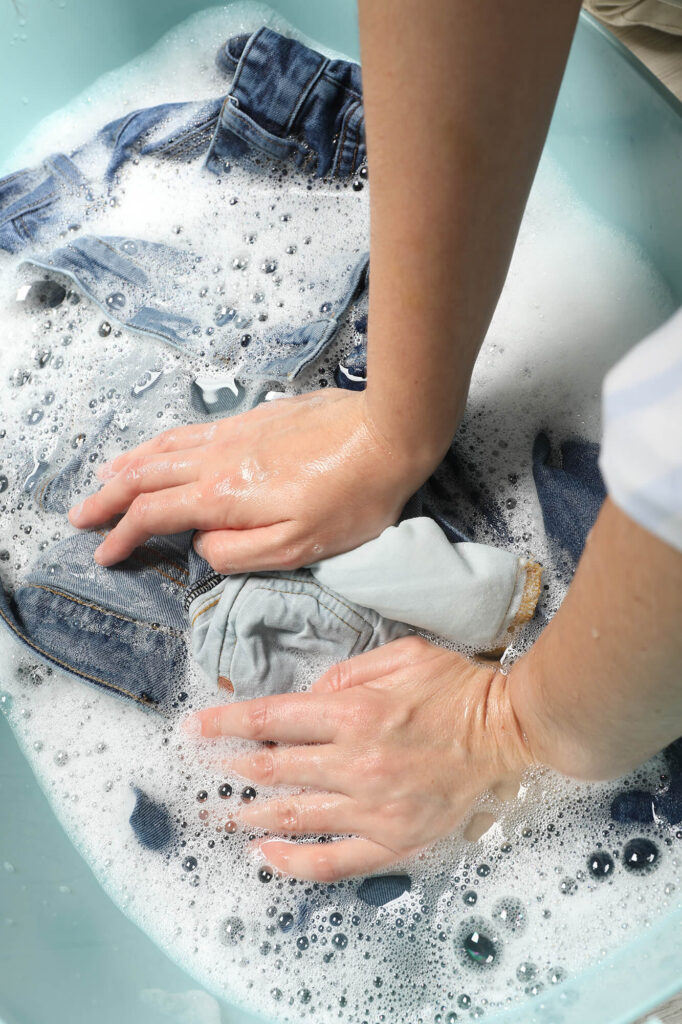
Soaking clothes is a traditional technique that many people still use to make cleaning easier. Leaving a garment in water before washing can help loosen stubborn dirt, but it can also weaken fibers if not done correctly.
The key is not whether to soak or not; the difference lies in when to do it and for how long.
We recommend that you also read Expert tips: how to keep your clothes looking new for much longer.
What happens when you soak a garment?
When you soak clothes in water with detergent, the liquid penetrates the fibers and allows the enzymes to act on the dirt; this helps especially when stains are stuck on or have been dry for a long time.
Time management is crucial, as prolonged water use can also cause:
- Loss of firmness in natural fibers.
- Color transfer between garments.
- Appearance of rust stains if there are metallic elements.
- Bad smell or weakening if the time is exceeded. Learn how to eliminate bad odors from your sportswear with Blu.
When is it advisable to soak?
Soaking is recommended for durable fabrics such as cotton, denim, or canvas, especially when there are tough stains like mud, dirt, grease, or sweat.
In these cases:
- For light soiling or daily use, 20 to 30 minutes in cold water is sufficient.
- For organic stains such as sweat or fresh blood, the ideal time is 30 to 60 minutes with warm water, which better activates the detergent's enzymes.
- For grease or food, it can be extended up to 1 or 2 hours maximum, always keeping an eye on the garment.
- In the case of mud or dirt, an hour in cold water helps to loosen the dirt before normal washing.
The general rule is clear: never exceed 2 hours.
When is it best to avoid it?
There are some garments that simply should not be soaked.
Avoid soaking in:
- Silk, because its natural fibers weaken with prolonged water exposure.
- Wool, as it can become deformed and lose its structure.
- Leather or delicate materials, like baby clothes.
- Garments with metal buttons or closures, which can rust and stain the fabric.
- Clothes with intense colors that tend to fade.
It's also important not to leave clothes soaking overnight. More than two hours can cause fermentation, unpleasant odors, and premature wear, especially in cotton.
How to soak correctly and sustainably:
If you decide to soak, do it intelligently:
- Use cold water whenever possible to reduce energy consumption.
- Apply detergent suitable for the type of fabric.
- Soak only the affected area when the stain is localized.
- Always check the care label before doing so.
A properly applied soak not only improves cleaning but also prolongs the life of the garment and prevents unnecessary repeated washings; and it can be a great ally when used judiciously. It's not a universal solution, but neither is it a practice that should be completely eliminated.
Understanding the type of fabric, the type of stain, and the appropriate cleaning time allows you to clean more effectively without compromising the garment's structure. At Blu, we believe that garment care begins with clear information and greater awareness of how we clean.
When you know how to wash, your clothes last longer and each wash is more efficient.