


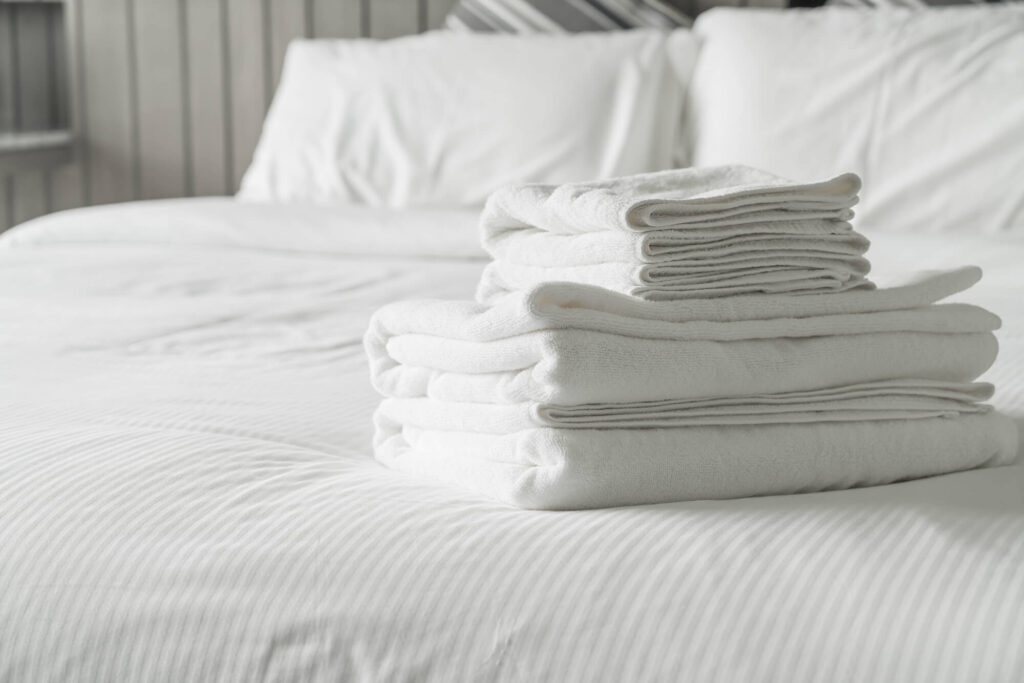
We spend approximately one-third of our lives sleeping. That means the bed is not just a place to rest, but one of the spaces where we spend the most time each day.
However, night after night, sheets accumulate natural skin oils, traces of lotions, sweat, and thousands of dead skin cells. All of this creates the ideal environment for dust mites.
That's why washing your bed linens isn't just about cleanliness or making them "smell nice." It's also a key habit for taking care of your health and improving the quality of your sleep.
Here we explain how to do it correctly.
Bar soap vs. liquid detergent: which one is better for your bedding?
1. How often should you wash your sheets? Ideally, you should change the sheets once a week.
If you sweat a lot while sleeping or share your bed with pets, it's recommended to do it every four or five days.
Pillowcases require special attention. If you have oily or acne-prone skin, changing them more frequently can make a big difference to your skin.
We also recommend reading the blog of Soaking clothes: when to do it and when it can damage them.
2. Pre-treatment for stains. Over time, it is common for yellowish stains to appear on pillows or in the area where the feet rest.
These stains are accumulations of body fat and sweat that, sometimes, ordinary detergent does not completely remove.
The Blu trick: dampen the stained area and gently rub with your Blu soap before putting the sheets in the washing machine.
Leave it to work for about 10 minutes so that the cleaning agents can penetrate the fiber and help remove grease from the start of the wash cycle.
3. Do not overload the washing machine. Sheets are large items that need space to move around inside the drum.
If you overload the washing machine, fabrics will become tangled, the detergent won't distribute properly, and the rinse cycle won't be sufficient. This can leave detergent residue on the fabric, resulting in a stiff texture or even skin irritation.
It's always better to do two light loads than one heavy load.
4. Temperature and washing cycles. Choosing the right temperature helps keep fabrics in good condition.
For white cotton, you can use warm water to help eliminate bacteria and mites; and for dark or synthetic fabrics, use cold water to prevent them from losing color or pilling.
As for the cycle, choose a Normal or Sheets program. Cycles that are too aggressive weaken the fibers over time.
5. Drying and final freshness. Whenever possible, drying sheets outdoors is an excellent option. The ventilation helps eliminate any traces of moisture.
If you use a dryer, remove the sheets when they are slightly damp and spread them out on the bed. This helps them stretch naturally and prevents them from wrinkling too much.
Sleeping in a clean bed, cared for with products that respect the fibers like Blu, not only improves the feeling of rest, but also contributes to your daily well-being.