


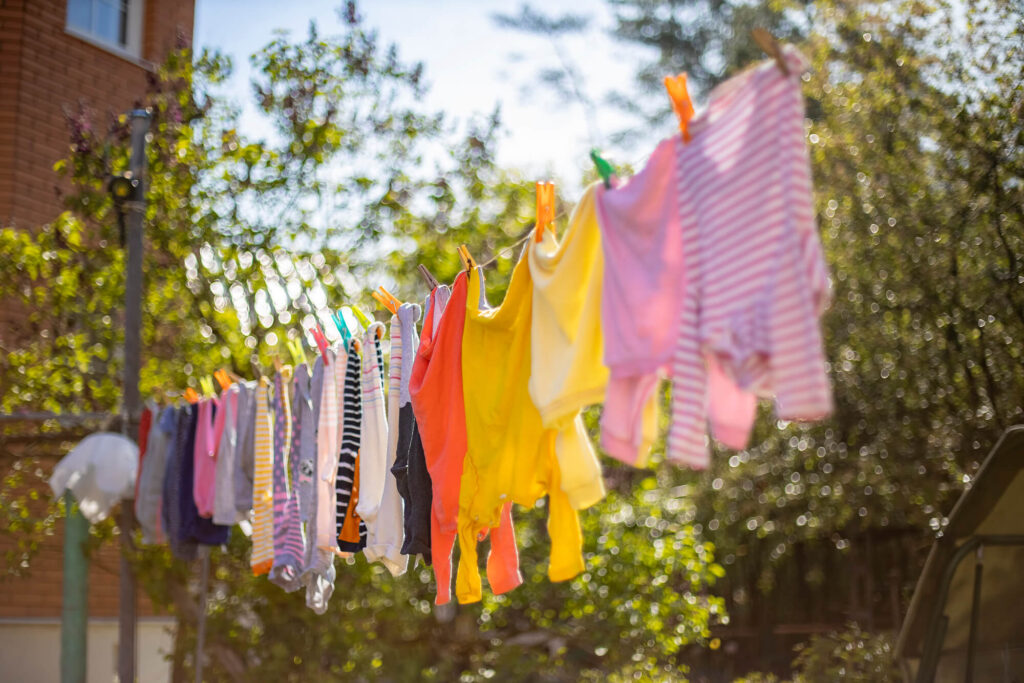
Drying clothes seems like the simplest step in the washing process, but it's actually one of the times we make the most mistakes. Excessive heat from the dryer or even hanging a garment incorrectly can shrink the fibers, distort the fabric, or cause clothes to lose their original shape much sooner.
Caring for your clothes doesn't end when you wash them. Understanding how different materials react to heat, water pressure, and air circulation is essential for keeping your garments in good condition for longer. Today we're sharing some Blu tips to help you do just that.
How to dry cotton clothes without them shrinking
One of the most common materials in any closet is cotton. You'll find it in t-shirts, sweatshirts, and jeans, but it's also one of the fibers most sensitive to heat.
High temperatures cause cotton to shrink, which explains why many garments "shrink" after being tumble dried. If you decide to use a dryer, it's best to choose a medium cycle and avoid drying the garment completely inside the machine.
In the case of jeans, for example, taking them out when they still retain a little moisture helps prevent the fabric from stiffening and allows it to adapt better to your body once it has finished air drying.
We also recommend you read: Do your clothes wear out quickly? The secret to keeping your garments looking new for longer.
Drying on a clothesline: small habits that make a difference
If you prefer to dry your clothes outdoors, there are two habits that can significantly improve the result.
The first is to shake the clothes before hanging them up, which helps to remove wrinkles and allows the fibers to settle better from the start.
The second tip is to hang clothes inside out, especially if they are colored. This prevents the sun from fading the color and helps preserve the garment's appearance for longer.
How to dry wool and delicate fabrics without deforming them
When it comes to wool or knitted fabrics, the main enemy is not the heat, but the weight of the water.
Hanging a wet sweater can stretch the fabric and permanently deform areas like the shoulders. The best way to dry them is horizontally, placing them on a clean towel and gently reshaping them.
This method allows the garment to dry without losing its structure or fit.
Sportswear and synthetics, why avoid the heat?
Sportswear And synthetic materials like polyester or lycra react differently to heat.
Although they are durable, high temperatures can affect their elasticity and cause them to lose their fit over time. The advantage is that this type of clothing dries quickly, so it doesn't need to be tumble dried.
The best thing to do is to let it dry in the shade, in a ventilated space, where the air does the work without weakening the materials.
Delicate garments and proper drying to avoid damage
In the case of delicate garments such as silk, lingerie or baby clothes, Even greater care must be taken. The constant movement of the dryer can weaken seams or damage lace.
For these items, the best way is to remove excess water by gently pressing with a towel, without wringing the fabric. Then, they should be placed on a flat surface to dry evenly and without losing their shape.
How to dry shirts without over-ironing
Proper drying can also help reduce ironing time.
A simple trick is to hang dress shirts directly on a hanger while they're still slightly damp and button the top button. The natural drape of the fabric helps them stretch, resulting in a more even finish with no extra effort.
Drying your clothes properly is also a way of taking care of them.
Taking care of how you dry your clothes is just as important as how you wash them.
Small changes in this step can make a big difference in the lifespan, appearance, and fit of your clothes. Because when you take care of every detail in the laundry process, your clothes not only look better, they also last much longer.
With Blu, Take care of and protect your clothes from beginning to end.